
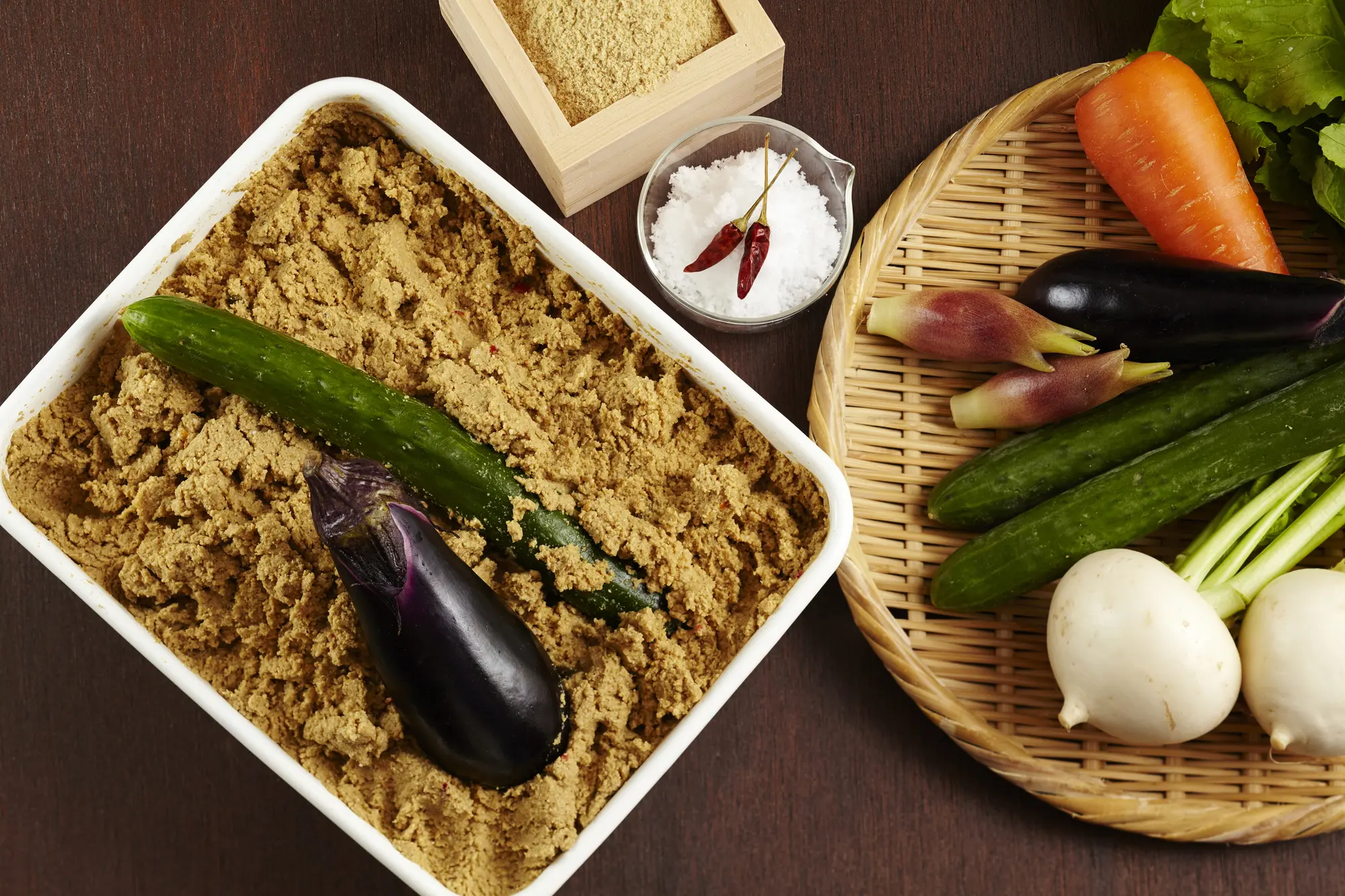
Japanese pickles are called tsukemono.
They are often served as a small side dish with rice and miso soup. At first glance, they may look like a simple addition to a meal.
But tsukemono can tell us a great deal about Japan.
They reflect the vegetables grown in each region, the local climate, the seasons, and the ways people have preserved food for generations.
From east to west and from north to south, the pickles of Japan change with the land.
Pickles Are Found Throughout Japan
Japan is a long country stretching from the cold north to the warm south.
The climate, landscape, and local agriculture vary greatly from one region to another. Some areas have long, snowy winters. Others are warm and humid for much of the year.
Because of these differences, the vegetables people grow are also different.
The vegetables used for pickles may include daikon radish, turnips, cucumbers, eggplants, Chinese cabbage, leafy greens, ginger, plums, or vegetables that are rarely seen outside a particular region.
People traditionally preserved what was available around them.
For this reason, Japanese pickles are closely connected to local agriculture.
The Vegetables Change with the Region
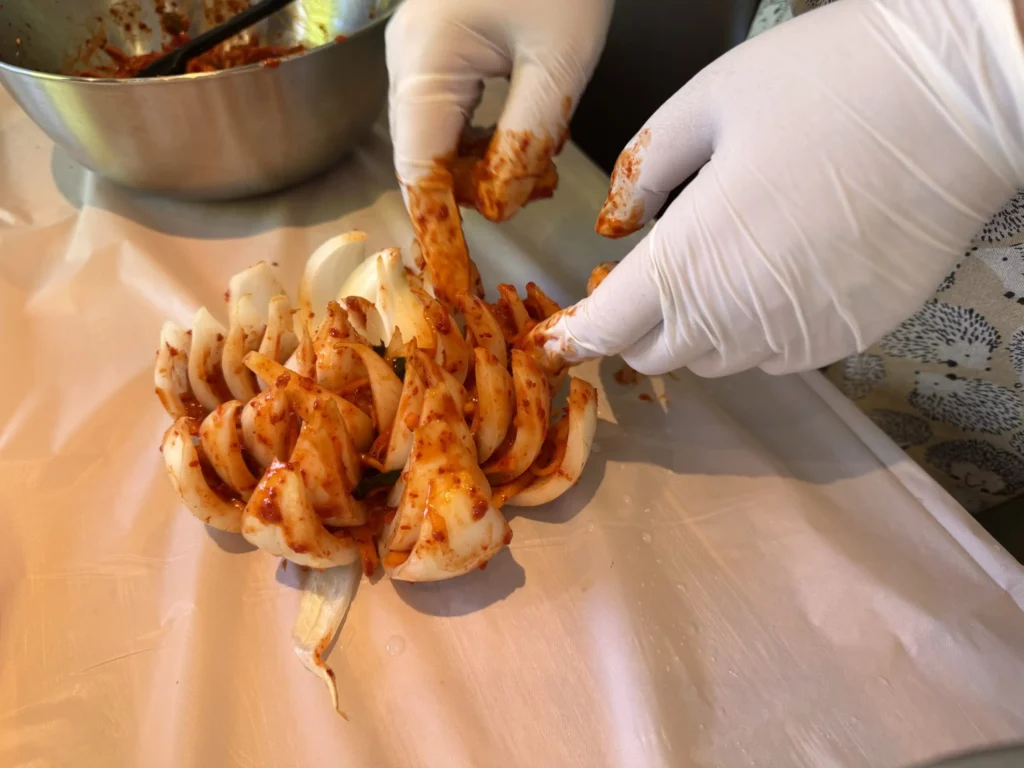
A region known for daikon radish may have many kinds of pickled daikon.
An area where leafy vegetables grow well may develop pickles made from mustard greens or other local greens.
In places where plums are widely cultivated, umeboshi and other preserved plum products become part of everyday life.
The ingredients were not selected only because they tasted good.
Pickling was also a practical way to preserve a large harvest and make vegetables last beyond their growing season.
When a particular vegetable was harvested in abundance, families needed ways to enjoy it for weeks or months.
Salt, rice bran, miso, sake lees, vinegar, and fermentation all helped make this possible.
Climate Shapes the Flavor
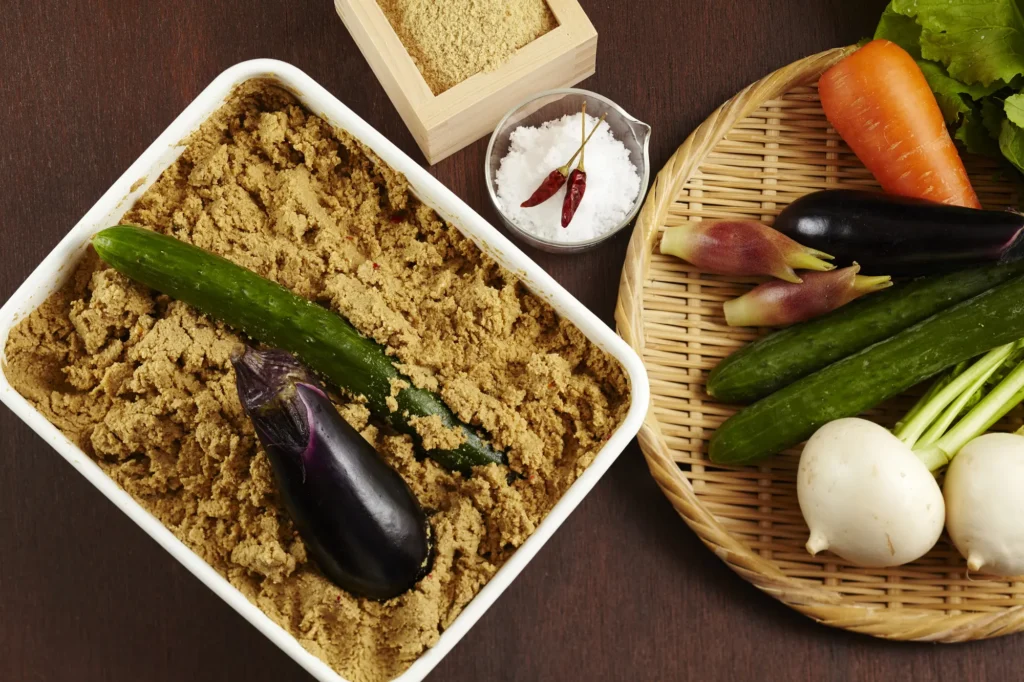
The flavor of Japanese pickles is also influenced by climate and geography.
In colder regions, people traditionally needed to preserve food for the long winter. Pickles could be saltier or fermented for longer periods so they would keep well.
In warmer areas, different methods and seasonings developed according to the local temperature, humidity, and available ingredients.
Some pickles are fresh and lightly salted.
Others have a deep, fermented flavor.
Some are sweet.
Some are sour.
Some are salty or spicy.
The taste reflects not only personal preference, but also the conditions in which people lived.
Different Flavors from East to West
Japanese food is often discussed in terms of eastern and western differences.
Seasonings, soup stock, soy sauce, and preferred flavors can vary between the two sides of the country.
Pickles also show these regional differences.
The amount of salt, sweetness, sourness, and fermentation may change from place to place. The same vegetable can be prepared in completely different ways depending on the region.
Even the name of a pickle may change.
There is no single taste that represents all Japanese tsukemono.
Their diversity is part of their charm.
Differences from North to South

The differences are not only between eastern and western Japan.
They can also be seen from north to south.
Northern Japan has colder winters and, in many areas, heavy snowfall. Traditionally, preserved vegetables were important when fresh produce was difficult to obtain during winter.
Southern Japan has a warmer climate and a different range of crops. Local citrus fruits, ginger, mustard, and other ingredients may influence the seasonings used in preserved foods.
Traveling through Japan and tasting local pickles can therefore be like reading a map through food.
Each region has its own ingredients, flavors, and methods.
A Record of Everyday Wisdom
Tsukemono were created through everyday experience.
People observed the seasons, learned how much salt to use, and discovered how temperature affected fermentation.
These methods were often passed down within families and communities.
The recipes were not always written down.
They were learned by watching, tasting, and helping in the kitchen.
A person might know that the vegetables were ready by their aroma, color, texture, or the way the liquid changed.
This knowledge connected people closely to their food and their environment.
More Than a Small Side Dish
In a Japanese meal, pickles may appear in only a small dish.
However, they have several important roles.
They add color and texture to the table. Their saltiness or acidity refreshes the mouth between bites. They also pair especially well with plain rice.
A crisp cucumber pickle, a sour umeboshi, or a deeply fermented vegetable can change the feeling of the entire meal.
Tsukemono may be small, but their flavors are often strong and memorable.
Pickles as Part of Japanese Home Cooking
Japanese pickles are not one single dish.
They are a large family of preserved foods shaped by local vegetables, climate, culture, and history.
Some are made quickly and eaten within a day or two.
Others are carefully fermented for weeks, months, or even longer.
Some are produced by skilled local makers. Others are still prepared at home using recipes passed down through generations.
At Kitchen Bee, we see pickles as an important part of Japanese home cooking and fermentation culture.
Learning about tsukemono is not only about learning how to preserve vegetables.
It is also a way to understand how people lived with the seasons and used the ingredients available in their own region.
Tasting the Landscape of Japan
When you taste a local Japanese pickle, you are tasting more than a vegetable and its seasoning.
You are tasting the crops grown in that area.
You are tasting the climate and the seasons.
You are tasting the wisdom of people who found ways to preserve food and reduce waste.
And you are tasting a tradition that has developed differently in communities throughout Japan.
Tsukemono may be served in a small dish, but they contain a large story.
They are a taste of the land, preserved and passed down from one generation to the next.